Features

What is Coreflux Hub 2.0 actually made of?

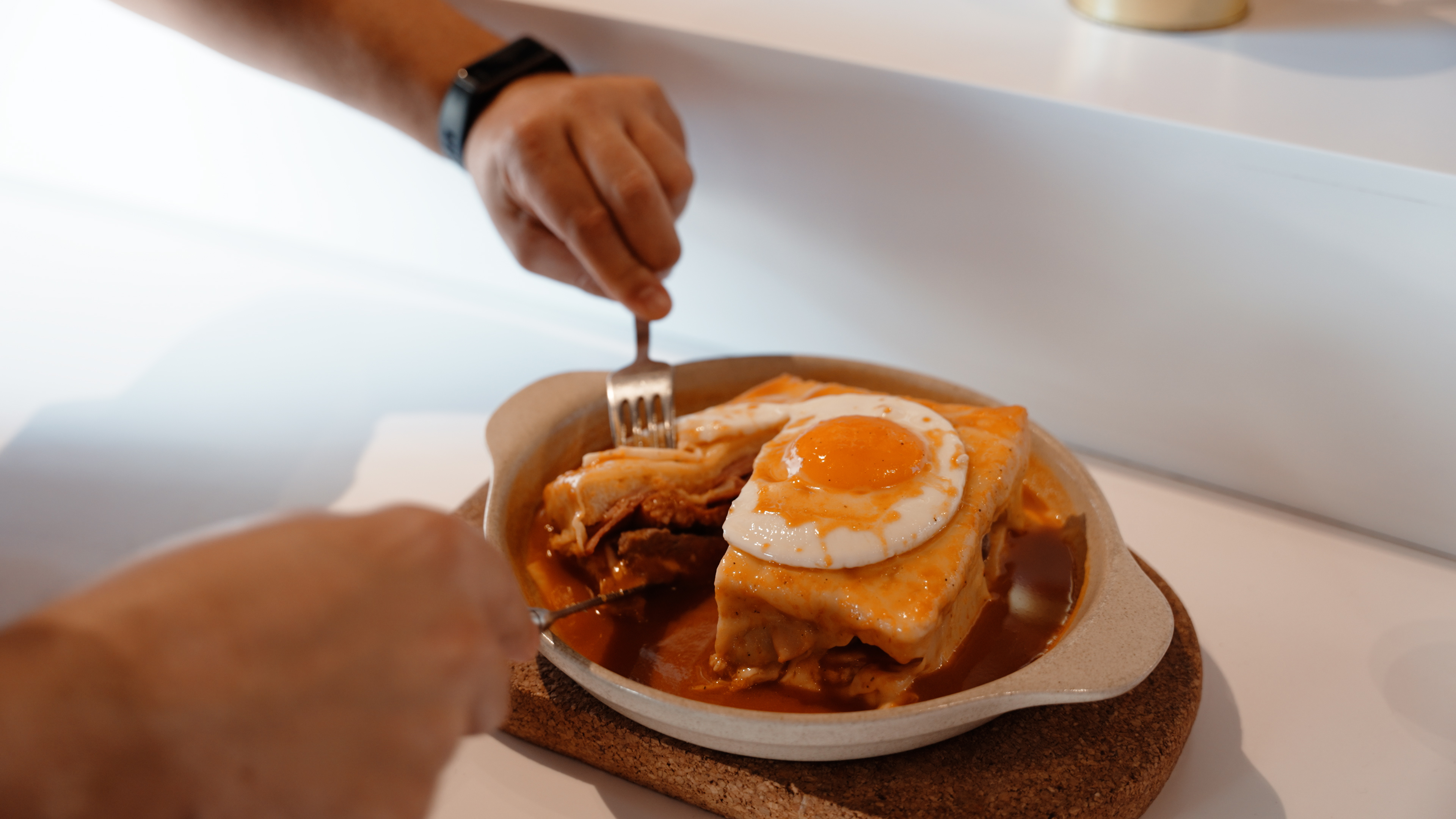
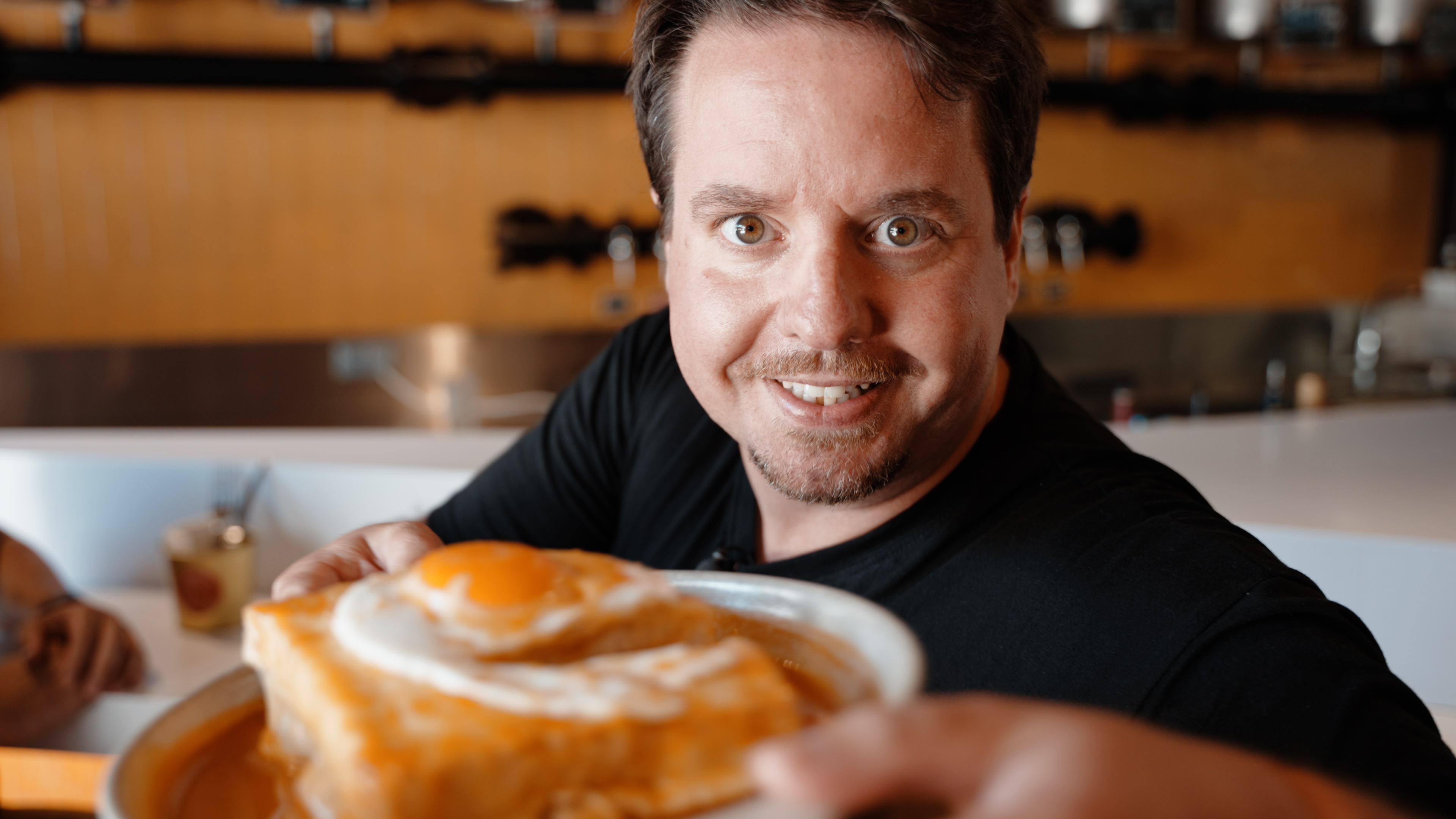
Hub is a Francesinha

What is Coreflux Hub 2.0 actually made of?

An episode of "This reminds me of Coreflux"

If you've never had a Francesinha, picture this: bread on the outside, then ham, then sausage, then steak, then cheese, then a sauce so dense it has its own opinions. Six or seven layers, each one technically a different meal, all stacked into a single dish that arrives at your table looking suspiciously like architecture.

Remove any one layer and you don't have a Francesinha anymore. You have a broken system with something essential missing, and the whole experience falls apart. The Francesinha doesn't work because of any single ingredient. It works because they're stacked.

Hub 2.0 is the same idea, for data systems and the integrations between them.

The Integration Hell most teams already live in

If you run any kind of connected operation, you already have a “stack.” It's just spread across twelve browser tabs, four laptops, three subscriptions, two contractors, and one person who left the company in 2019 and was the only one who understood the Modbus gateway.

You open one tool to read MQTT topics. Another to build dashboards. Another to write logic. Another to connect a PLC. Another to look at historical data. Another to send a Slack message when something breaks. Each one was a reasonable choice at the time. Together they're an architecture that nobody designed and everybody maintains.

We built Hub 2.0 because we had the same problem.

One Hub, every layer

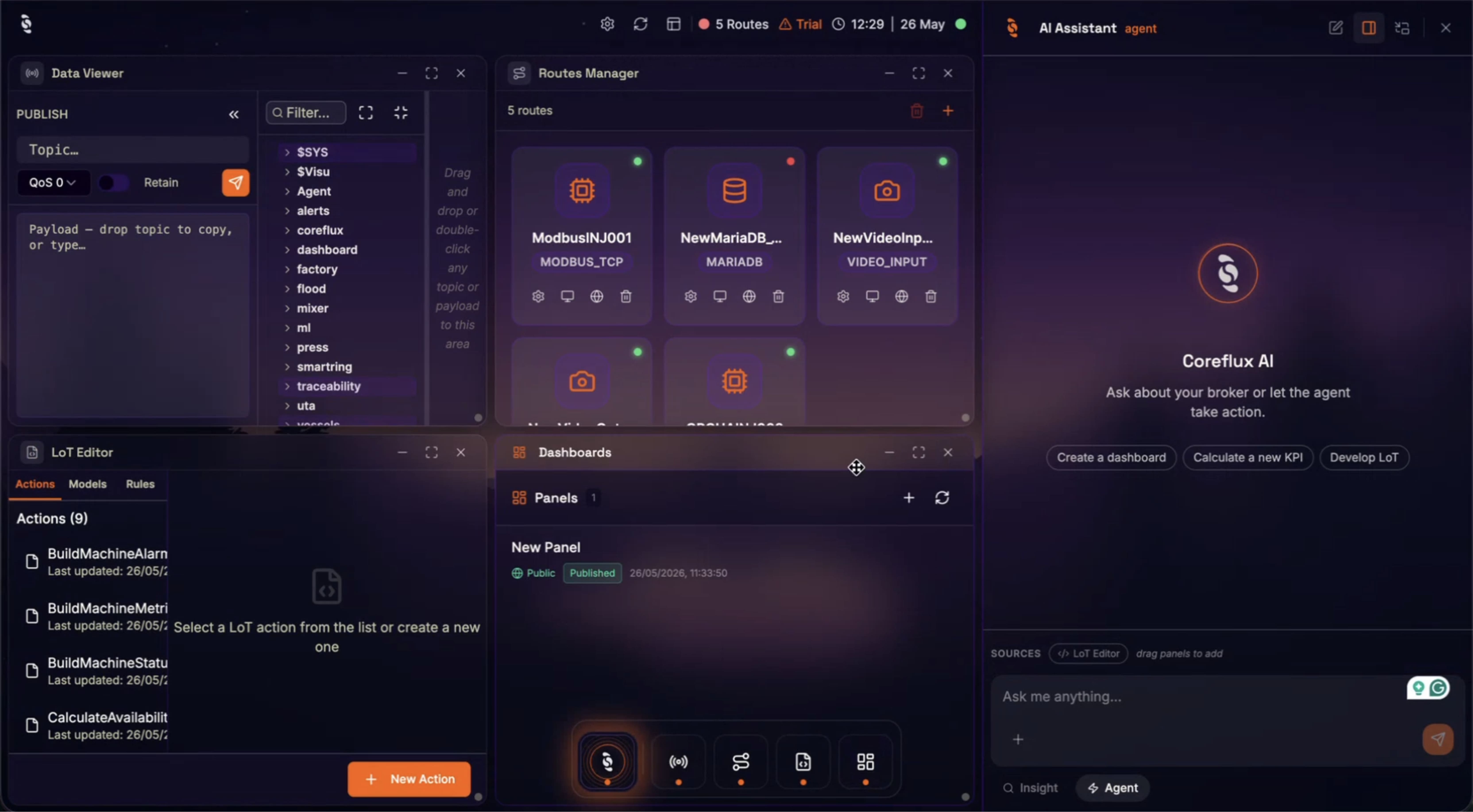
Hub 2.0 is where you actually run Coreflux, and it looks more like an operating system than a settings panel. Open it in a browser and you see a desktop. A bottom dock. Apps you can open, move around, snap to the edges, tile, organize how you actually work.

Each app is a layer. Each layer does its own job. Stacked, they're the whole platform.

The Data Viewer. A live look at every topic on your broker. The classic MQTT explorer-style tree on one side, the payload on the other. But also: graphs, timelines, maps, scrubbable history. Drag any topic to publish it, chart it, compare it. Color coding so five topics on screen don't look like five identical lines. You're not staring at raw JSON anymore. You're seeing your system.

The LoT Editor. Where your logic lives. Actions, Models, and Rules, all editable in the browser, deployed to the broker without a build step or a restart. The same Language of Things runs underneath. The Editor just brings it to the surface, where the people who didn't write it can still read it.

Routes Manager. Every connection to the outside world. Industrial protocols, databases, REST APIs, AI services, all on one map. The integration mesh that used to live in your head, now visible.

Dashboards. Build a view from a component library. Drag a gauge, bind it to a topic, watch it update. Click share, copy the URL, open it on a TV, kiosk, or anywhere with a browser. Same live data, no extra license, no separate frontend team.

The AI Assistant. Open the chat panel, describe what you want in plain language, get a working Action, Route, or dashboard back. It uses your actual broker as context, so it doesn't make things up about your data. It's still in beta. We're not pretending otherwise. It’s getting better every week.

Each one of these used to be a separate product. Now they share state, share your project, and share the same interface. Click between them. No reloads. No logins.

Have it your way

A Francesinha cook doesn't ask if you want layers. You want layers. They ask if you want a fried egg on top, sauce on the side, steak medium or rare.

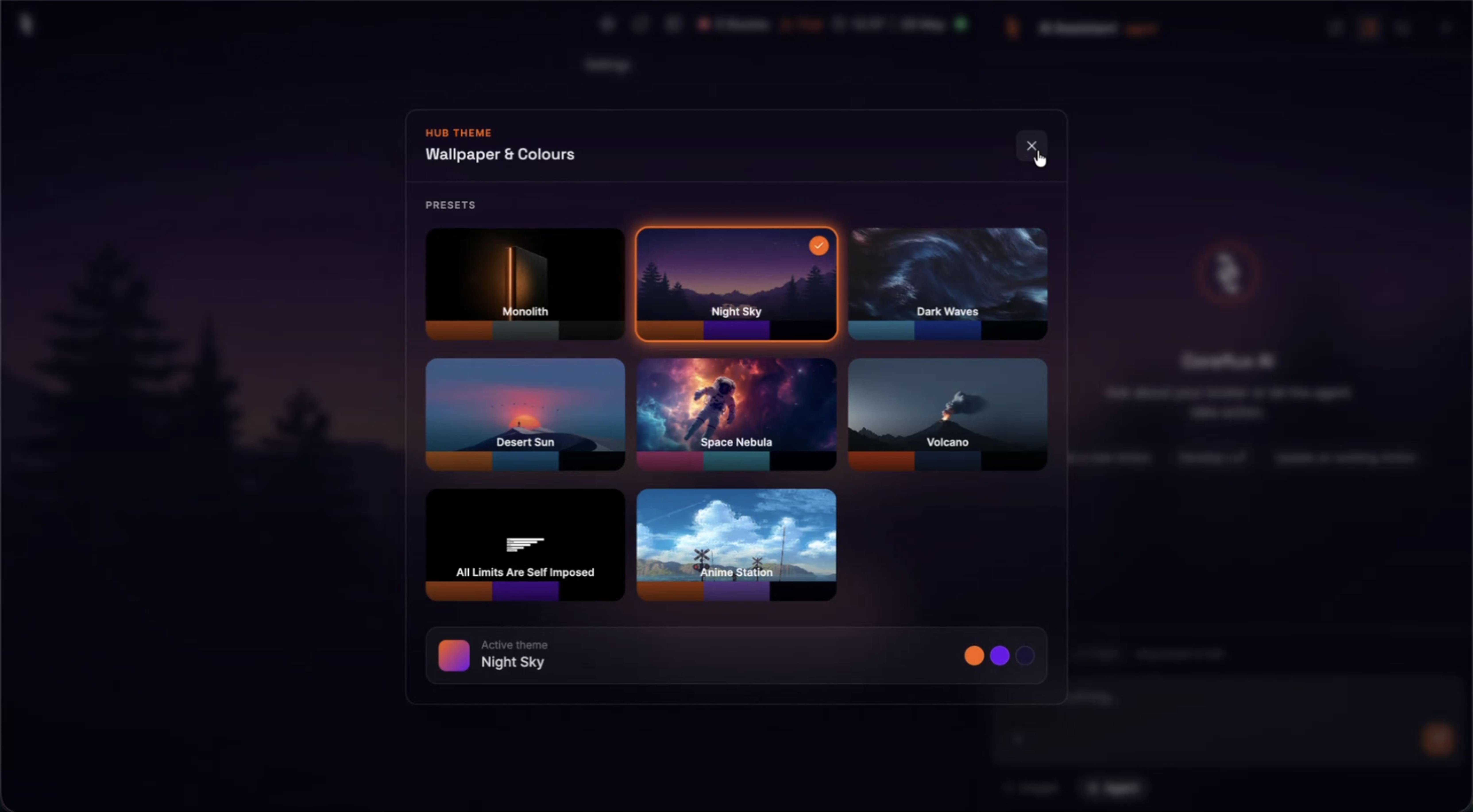
Hub 2.0 does something similar. The interface is customizable. Window layouts you can save and switch between. Themes you can choose from, all tested for accessibility. Tile, snap, stack, full-screen, your call. The builder, the operator, and the executive can each open the same Hub and see something tuned to how they work. Same product, three lenses.

The trick is the stack

A Francesinha isn't about the meat or the cheese or the sauce. It's about the fact that they show up on the same plate, in the right order, under the right sauce, and you eat the whole thing as one bite at a time.

Hub 2.0 isn't about the Data Viewer, or the LoT Editor, or the Dashboards, or the Routes Manager, or the AI Assistant. It's about the fact that they show up in the same place, share the same data, and work together as one product.

That's the trick. That's the platform.

Watch the episode

Isaac, our UX lead, walks through Hub 2.0 from his desk in the first episode of This reminds me of Coreflux. João Barroso starts the conversation on the streets of Porto with an actual Francesinha. Whether or not anyone got to eat it on camera is something you'll have to watch to find out: https://youtu.be/mYhX0SXgfVY?si=Aw3zwqZyTUmxVDfM

Try Hub 2.0 here 👉 https://www.coreflux.org/

Recent Posts